
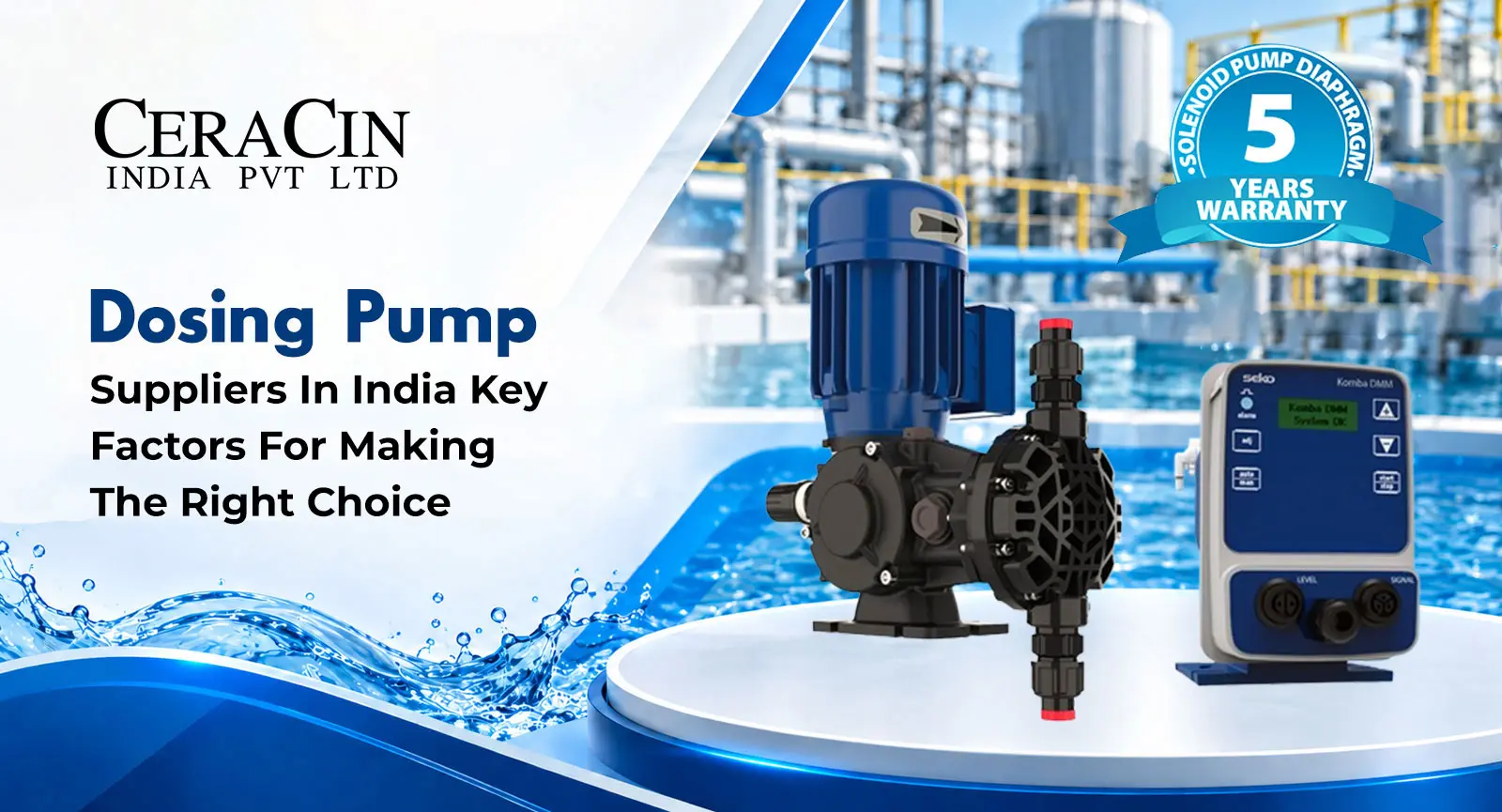
Dosing Pump Suppliers in India: Key Factors for Making the Right Choice
Overview – A dosing pump that is even slightly inaccurate can throw off an entire water treatment or chemical process, since these pumps are meant to inject a precise, small amount of chemical into a flow of water, steam, or gas, not just roughly add it in. This blog goes through the practical things worth checking before you pick a supplier: accuracy, material compatibility, ease of maintenance, and the range of applications they actually understand.
This Blog Covers:
Introduction
A dosing pump is a positive displacement pump, which simply means it pumps a fixed, measured volume of liquid with each cycle rather than a rough, variable flow. This makes it the standard choice wherever a process needs a chemical added in a controlled, repeatable amount, water treatment plants, food and beverage lines, and general industrial processes, among them. Picking the wrong pump, or buying from a supplier who does not understand your specific chemical and process, usually shows up later as inconsistent dosing, frequent breakdowns, or a pump that simply cannot hold up to the chemical being pumped through it.
How a Dosing Pump Actually Works
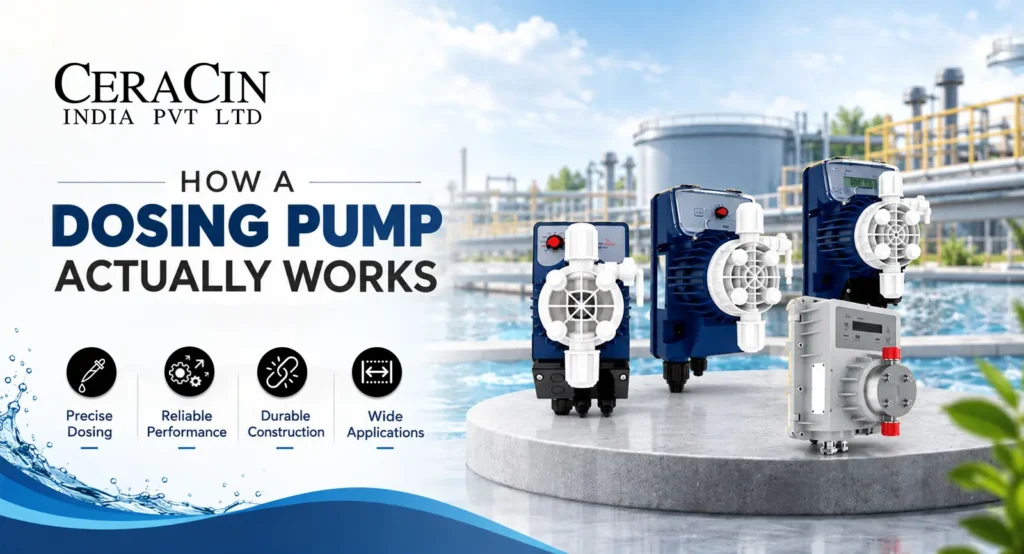
Understanding the basic working of a dosing pump helps you ask the right questions when comparing suppliers.
A dosing pump draws a set quantity of liquid into its chamber and then pushes it into a pipe or tank that already holds the fluid being dosed. It is usually driven by an electric motor or a solenoid, and a controller switches the pump on and off while also regulating the flow rate to match what the process actually needs. Since the whole point of this pump is precise, repeatable dosing, the quality of the motor, controller, and internal components directly decides how consistent that dosing actually is over months and years of use.
Accuracy and Flow Rate Control
Accuracy is the single most important thing a dosing pump needs to deliver, since even a small, consistent error compounds into a real problem over thousands of dosing cycles.
Ask a supplier directly what accuracy their pump achieves and how it is controlled, whether through a basic manual stroke adjustment or a more advanced electronic control system. For processes where the required chemical amount changes depending on conditions, such as pH adjustment that reacts to incoming water quality, a pump with proper electronic control and feedback gives far more reliable results than a fixed, manually set pump. A supplier who cannot explain how their pump maintains accuracy over time, not just when it is brand new, is not someone to rely on for a process where dosing precision actually matters.
Material Compatibility for Your Chemical
The materials used inside a dosing pump, particularly the diaphragm, valves, and any wetted parts, need to actually withstand the chemical being pumped, or the pump will fail well before it should.
Different chemicals need different materials; PVDF and PTFE handle a wide range of aggressive chemicals well, while other materials suit less corrosive fluids at a lower cost. A supplier who asks detailed questions about the exact chemical, its concentration, and its temperature before recommending a pump is generally more trustworthy than one who offers a single standard configuration regardless of what you are actually dosing. Getting this wrong is one of the more common reasons a dosing pump fails early, seals degrade, diaphragms crack, or valves stop sealing properly against a chemical they were never built to handle.
Ease of Installation and Maintenance
A dosing pump that is difficult to install or maintain ends up costing more over its working life, even if the upfront price looked attractive.
A compact, well-designed pump installs without excessive plumbing changes and needs minimal ongoing maintenance, which matters directly for uptime in a plant where the dosing process cannot afford long stoppages. Ask about how easily worn parts like diaphragms and valves can be replaced and whether spare parts are readily available locally rather than needing to be imported or specially ordered. A supplier who can also guide your team through basic troubleshooting, rather than requiring a service visit for every small issue, saves real time when something does need attention.
Application Range a Dosing Pump Supplier Should Cover
A supplier who understands a wide range of applications is generally better placed to recommend the right pump for your specific process, rather than fitting your job around whatever they usually sell.
- Disinfection of process water in treatment plants
- Food and beverage processing lines needing precise chemical addition
- Ultrafiltration and irrigation systems
- Cleaning-in-place processes in food, pharma, and similar industries
- pH adjustment and disinfection across various water treatment setups
- General chemical dosing pump applications across industrial processing
A supplier familiar with several of these applications has likely already worked through the practical issues specific to each one, chemical compatibility, flow rate needs, and control requirements, rather than treating every job the same way.
Talk to Ceracin About Your Dosing Requirement
Ceracin india pvt Ltd, based in Vadodara, Gujarat, has been manufacturing dosing pump units since 2016, with a range of designs and configurations built for accuracy and precision across water treatment, food and beverage, and general industrial applications. The team asks the right questions about your chemical, concentration, and process before recommending a pump, rather than pushing a single standard configuration for every order.
Frequently Asked Questions
What is the difference between a manual and an electronic dosing pump?
How do I know which material is right for my dosing pump’s wetted parts?
How often do Dosing Pump diaphragms need to be replaced?
Can the same dosing pump be used for different chemicals over time?

Ceracin
Ceracin has expertise in industrial pump manufacturing since 2016. We are committed to provide our nation with the highest quality pumps at competitive prices.