
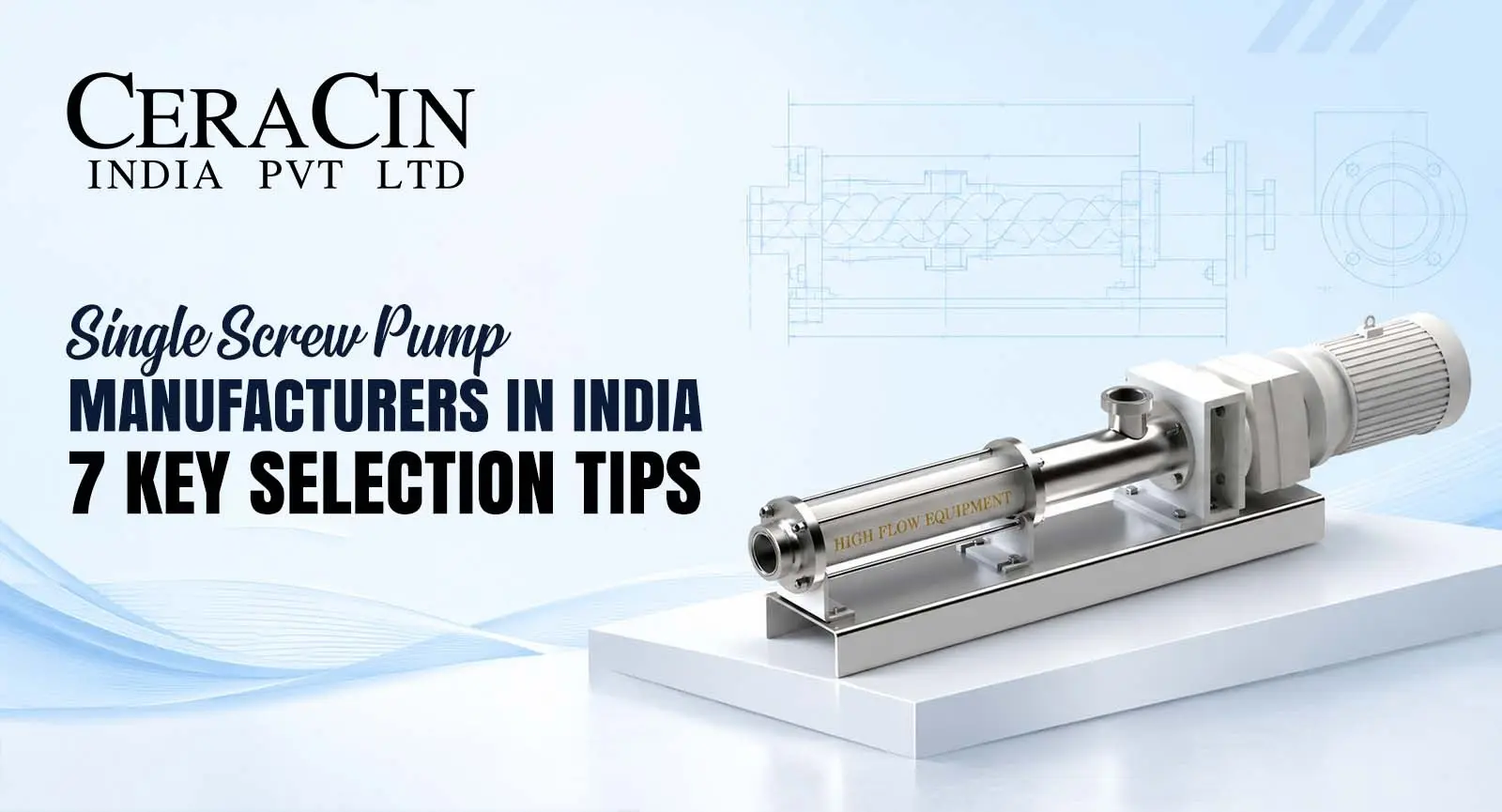
Single Screw Pump Manufacturers in India: 7 Key Selection Tips
The Short Version
Choosing among Single Screw Pump manufacturers in India comes down to matching the pump to your fluid and duty. This blog gives seven selection tips: fluid details, flow and pressure, materials, sealing, drive and protection, maintenance design, and supplier support with total cost. By the end, you will have a simple checklist to compare makers with confidence.
What You Will Find Below
- Start With the Fluid You Are Pumping
- Get Flow, Pressure and Speed Right
- Rotor and Stator Materials That Match the Job
- Sealing Choices and Leak Control
- Drive, Joints and Protection Against Dry Running
- Maintenance Design That Keeps a Single Screw Pump Running
- Supplier Track Record, Spares and Real Cost
- A Short List of Questions
- Take It Forward
- Buyers Often Ask
What Makes This Pump Different
A single screw pump, also called a progressive cavity pump, moves liquid through sealed cavities formed between a spiral rotor and a rubber-lined stator. Flow stays smooth and steady, and it rises and falls with pump speed.
That is why it handles thick, sticky, gritty and shear-sensitive fluids so well, from sludge and slurry to pastes, sauces and chemicals. But the wrong selection wears the pump out fast. The tips below help you choose better. Use them as a checklist when quotations arrive. Most problems start at the selection stage, not on the plant floor.
Start With the Fluid You Are Pumping
Everything depends on the fluid. Note its viscosity, temperature, solid content, particle size, abrasiveness and chemical nature. Share these details with every manufacturer so quotations are comparable.
A good maker asks follow-up questions before recommending a single screw pump. Be careful with anyone who quotes a model without asking about your fluid, because a wrong match can ruin the stator in weeks.
Mention anything unusual too, such as fibres, sand, oil, gas bubbles or changes in temperature during the day. Honest details now prevent surprises later. A sample test with your actual fluid is even better if the maker offers it.
Get Flow, Pressure and Speed Right
State the flow you need, the discharge pressure and the suction conditions. Flow in this pump depends mainly on speed, while pressure depends on the number of stages.
Slow speeds usually give longer life, especially with abrasive or thick fluids. A pump that runs fast to meet the flow wears quickly, so a larger pump at lower speed is often the smarter choice.
Check the suction side as well. Ask about the net positive suction head needed, the pipe size and whether a feed hopper or auger is useful for very thick material. Also allow some margin for future needs.
Rotor and Stator Materials That Match the Job
The rotor and stator are the parts that wear, so material choice matters most. Rotors are often hardened or chrome-plated steel or stainless steel for corrosive fluids.
Stators come in rubber grades such as NBR, EPDM and FKM, each suited to different chemicals and temperatures. Ask the maker to explain why a certain grade suits your fluid and to share a compatibility chart.
Check the casing, shaft and suction housing material too. Mild steel is fine for many jobs, while chemicals and food use call for stainless steel. Cast iron housings suit sludge and water duties. Wrong materials are the most common reason for early failure.
Sealing Choices and Leak Control
The shaft seal is a common trouble spot. Ask whether the pump uses gland packing or a mechanical seal and why. Packing is cheap and easy to adjust, but it leaks a little by design.
Mechanical seals leak less and suit hazardous or clean duties, but they cost more and need careful flushing. Single or double seals and flush plans depend on how risky the fluid is.
Ask about seal life from similar jobs and about the cost and ease of replacement. A leaking pump is untidy, unsafe and expensive over time. Think about what happens if the fluid is toxic, hot or sticky when it leaks.
Drive, Joints and Protection Against Dry Running
The drivetrain sits between the motor and rotor, and it needs to be strong. Ask about the type of joints, whether pin joints or flexible shafts, and how they are sealed and lubricated.
Dry running destroys a stator in minutes. Look for protection such as a dry-run probe, a temperature sensor or a pressure switch. These cost little compared with a stator and a day of lost production.
Check the motor rating, gearbox or variable speed drive, and the base frame. A good Single Screw Pump package arrives aligned, well supported and ready to connect. Variable speed drives also help you adjust flow without throttling valves.
Maintenance Design That Keeps a Single Screw Pump Running
Every unit needs a rotor or stator change someday. Ask how easily this can be done. Some designs allow replacement without removing the pump from the pipeline, which saves hours of downtime.
Look at access points, the number of bolts and the tools required. A pump that your own maintenance team can open and close in a few hours is worth more than one that needs a specialist every time.
Ask about recommended spares, expected stator life with your fluid and a simple service plan. Keeping a spare stator on the shelf is a smart habit. Clear drawings and a good manual make servicing much easier.
Supplier Track Record, Spares and Real Cost
Experience matters. Ask how long the company has made these pumps, which industries it serves and whether you can speak to existing users. It also helps to choose a Single Screw Pump Supplier who builds and tests its own pumps, since they can explain every part.
Check spare part stock, warranty terms and service response. A working phone number and a team that replies quickly is worth more than a small discount.
Compare quotations on total cost. Add power use, seals, stators, downtime and servicing to the purchase price. The cheapest offer often costs more over the years, while a well-built pump from a trusted maker usually proves the better investment.
A Short List of Questions
Keep this list ready when you speak to manufacturers:
- What stator material do you suggest for my fluid, and why?
- At what speed will the pump run for my flow?
- Which seal type do you recommend?
- What dry-run protection is included?
- How easily can the rotor and stator be replaced?
- How quickly can you supply spares?
Clear answers to these tell you most of what you need to know.
Moving Forward
Choosing a maker takes time, but it pays off. Check the fluid details, sizing, materials, sealing, maintenance and total cost, and do not rush the decision.
If you are planning to buy, you can look at the range offered by Ceracin. Go through the models, note down your fluid details, flow and pressure needs, and contact the team to discuss what suits your process. A short conversation now can save you a lot of trouble later when choosing your next single screw pump.
Buyers Often Ask
How long does delivery take?
Can the pump handle my thick or abrasive fluid?
What does the warranty cover?
Do you provide installation and training?
Ceracin
Ceracin has expertise in industrial pump manufacturing since 2016. We are committed to provide our nation with the highest quality pumps at competitive prices.