
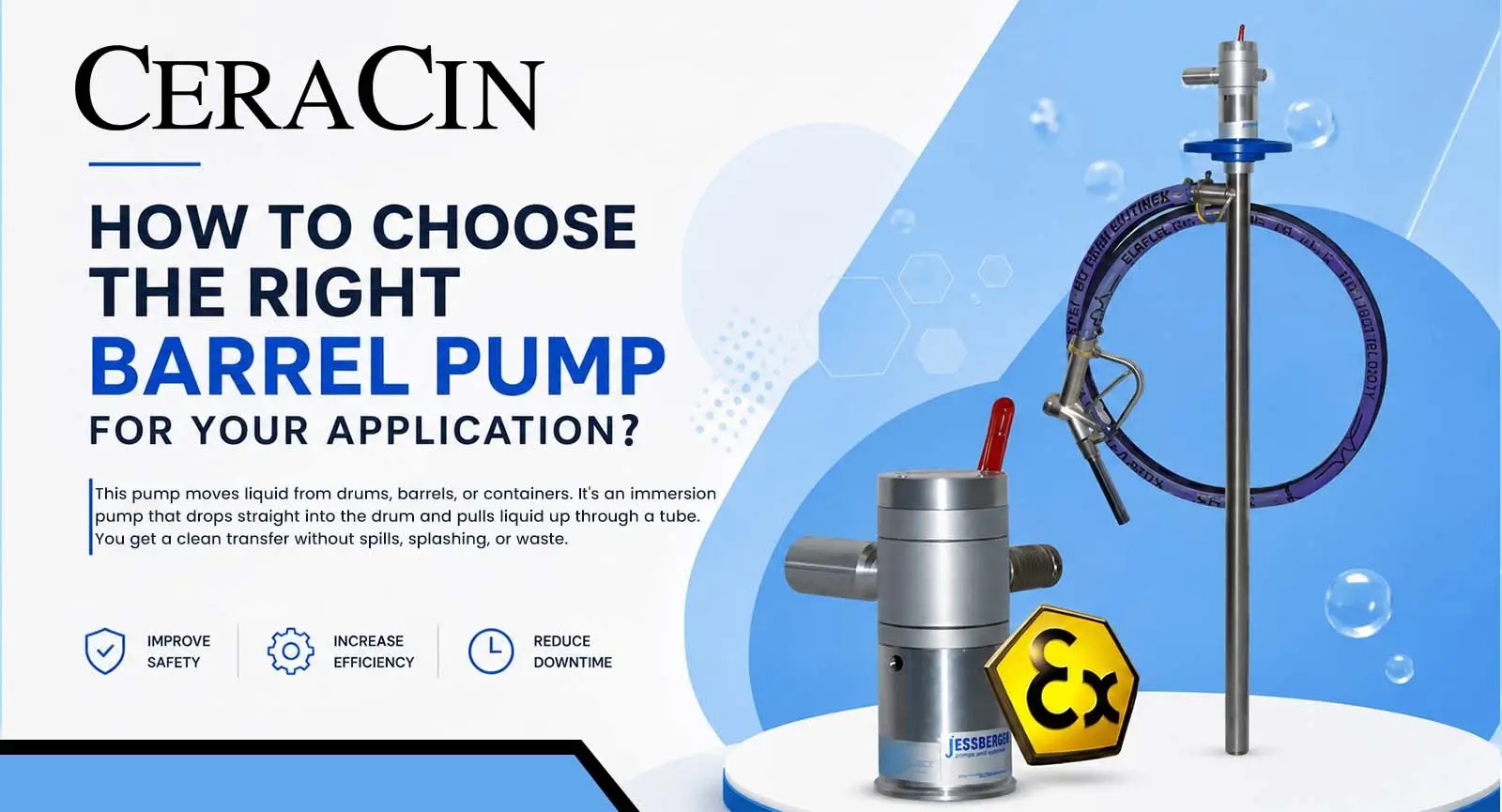
How to Choose the Right Barrel Pump For Your Application?
Picking a barrel pump comes down to one thing: how well it handles the actual liquid you need to move. If you pick a pump that looks fine but can’t handle your chemical, it will leak, corrode, or stop working mid-job. If you don’t match the pump to your barrel size and flow needs, you waste time and product. The right pump matches the work you actually need to do, not just the price or specs on the box. In this blog, you will find out how to pick the right barrel pump for your application.
What a Barrel Pump Does
This pump moves liquid from drums, barrels, or containers. It’s an immersion pump that drops straight into the drum and pulls liquid up through a tube. You get a clean transfer without spills, splashing, or waste.
Barrel pumps show up in chemical plants, warehouses, Water treatment facilities, fuel stations, and manufacturing shops. They handle acids, solvents, oils, fuels, and other liquids safely. You connect the pump to a motor, pneumatic air line, or just use a manual hand mechanism to get flow going.
A good pump empties the drum completely with little leftover. A bad one leaves product behind, wastes material, and creates safety risks.
Benefits of Using These Pumps
They are practical and handy for emptying and transporting liquids in drums. Here is what you get when you use them:
Toxic Chemical Transfers
You can safely move toxic and highly corrosive fluids from container to container. This reduces risk of personal injury, cuts repairs, and keeps you compliant with safety standards.
Portability
You can’t beat barrel pumps for portable systems. They’re lightweight but strong. You can transfer small volumes or empty a full truck with the same pump.
Testing and Measurement
You learn pretty quick that pumps make testing and measurement more convenient. You can test liquids in different areas without losing speed or efficiency, it just flows. This simplifies getting accurate chemical level and purity measurements.
Fast Transfers
These pumps complete transfers quickly, great for meeting tight deadlines. Fast, safe, efficient transfers increase deliveries, speed up production, and keep schedules on track.
Noise Reduction
Drum and barrel pumps run surprisingly quiet. This cuts down on noise in the work environment. Employees can operate pumps without hearing-related problems.
Because of these benefits, these pumps are a go-to for chemical handling, fuel transfer, dosing, and wastewater work.
Selection Criteria for a Barrel Pump
The most important thing when picking a quality pump is material compatibility. Liquids vary in viscosity and chemical properties. No pump handles all media. The pump must be chemically resistant to the liquid you’re moving.
What You Need to Consider
Fluid Type
What are you pumping? Acids, solvents, oils, fuels, water, or chemicals? Check chemical compatibility for the pump head and outer tube material.
Viscosity
Low-viscosity fluids (water, solvents) flow easy. High-viscosity fluids (oils, syrups) need more power and larger clearances.
Barrel Size
Standard drums are 55 gallons. Check tube length matches your barrel depth. Too short leaves product. Too long hits the bottom and clogs.
Flow Rate
How fast do you need to empty the drum? Flow rates range from 1 to 8 liters per minute. Match flow to your job size.
Power Source
Manual pumps for occasional use. Electric pumps for continuous work. Pneumatic pumps for flammable chemicals or hazardous areas.
Pressure Rating
Check the maximum pressure the pump can handle. Some applications need higher pressure for long hose runs or vertical lift.
Types of Barrel Pumps
Manual Barrel Pumps
Hand-operated. Good for occasional use, small volumes, low-viscosity liquids. Lightweight, no power needed, low cost. Best for maintenance shops, small labs, or infrequent transfers.
Electric Barrel Pumps
Powered by 220V or 110V motors. Good for corrosive chemicals, acids, continuous work. Higher flow rates, consistent performance. Best for chemical plants, warehouses, production lines.
Pneumatic Barrel Pumps
Powered by compressed air. Good for flammable chemicals, solvents, petroleum products, fuels. No electric motor, so zero spark risk. Best for hazardous areas, fuel depots, explosive environments.
How to Match Barrel Pump to Your Work Site
Once you know what you need, match it to your work location and conditions.
Think About:
- How many drums you empty per day
- Fluid type (acid, solvent, oil, fuel, water)
- Work location (inside, outside, hazardous area)
- Power source available (electric, air compressor, manual)
- Hose length and vertical lift needed
A pump used all day needs better cooling, better seals, and higher duty cycle than one used a few times a week. Work site conditions affect pump life, hose durability, and motor wear.
Common Mistakes When Choosing This Pump
People make these mistakes often:
- Picking wrong material – pump corrodes when it contacts your chemical
- Tube too short or too long – leaves product or clogs on drum bottom
- Undersized flow rate – takes forever to empty drums, wastes time
- Ignoring power source – electric pump in hazardous area = explosion risk
- No strainer or filter – debris clogs pump, damages internals
Another mistake is thinking all pumps with the same flow rate perform the same. Motor quality, seal material, tube material, and coupler design matter a lot.
How to Get the Best from Your Barrel Pump
To get the most from your pump:
- Check chemical compatibility before installation
- Clean strainer before each use
- Inspect tube for cracks or wear
- Flush with compatible solvent after each job
- Store pump upright to prevent leaks
- Talk to a supplier who knows barrel pumps for the right material, length, and flow rate
Think ahead for future jobs. If your fluid type or volume may change, pick a pump that handles that without being too big for now.
Barrel Pump on Real Jobs
Modern pumps use is about getting consistent transfers, not waiting for perfect conditions. Crews expect steady flow, safe handling, and clean emptying.
Speed Matters
Fast emptying is expected. Safe transfer is expected. No spills are expected. When the pump works, crews don’t notice. When it fails, time and product are lost. Your barrel pump decides how many drums you empty per hour.
Handling Different Fluids
Most facilities use different liquids. The challenge is finding a pump that handles them all. Thick fluids slow flow. When fluid is too thick, performance drops. Your pump must handle your range of fluids without too much thinning or heating.
Safety Is Important
Bad transfers cost money to fix. Safety affects how long workers stay healthy, how long equipment lasts, and if the facility passes inspection. Getting it right means fewer accidents and better compliance.
Fixing Barrel Pump Problems
If your pump runs but flow is weak:
- Check strainer and intake for clogs
- Find blockages before the pump
- Check hose and tube for kinks or leaks
- Look for worn seals or damaged couplers
- Adjust pressure or air flow for pneumatic pumps
- Flush thoroughly with compatible solvent
Wait for it to settle. Cleaning and testing take time for changes to work and flow to stabilize.
Final Thought
Finding the right pump comes down to matching it with your liquid, drum size, and work conditions. When the pump fits, flow stays steady, transfers stay safe, and waste stays low. Mess up compatibility and you deal with leaks, corrosion, and dangerous spills.
Ceracin puts out barrel pumps built to perform and last in chemical, fuel, and industrial applications. When you get the material, flow rate, and power source right, you protect your crew, save time on transfers, and handle liquids properly without spills.
If you want to see different pump options and connect with folks who know chemical handling, head over to Ceracin website. They can help you choose the right barrel pump for your application and show you how to install and maintain it.
FAQs
What is the most important factor when choosing a barrel pump?
What are the Benefits of Using Barrel Pumps?
How do I match a barrel pump to my work site?
What happens with the wrong barrel pump material?
What is the difference between electric and pneumatic barrel pumps?

Ceracin
Ceracin has expertise in industrial pump manufacturing since 2016. We are committed to provide our nation with the highest quality pumps at competitive prices.