
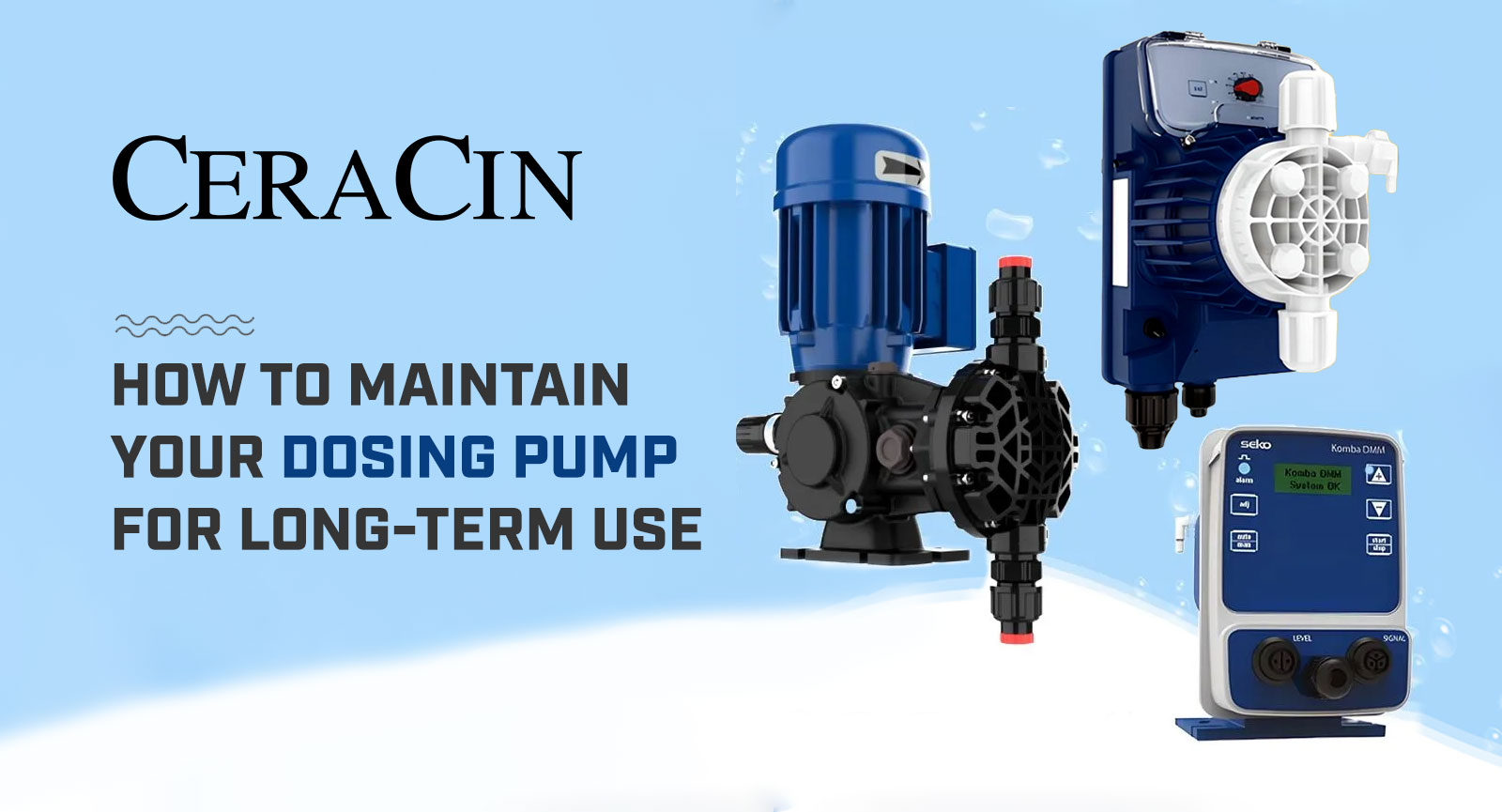
How to Maintain Your Dosing Pump for Long-Term Use
To keep a pump operating for as long as possible, maintenance is essential. In this tutorial, we discuss some of the most common difficulties that can arise with dosing pumps and how to properly maintain your pump to prevent complications.
Here are some tips to maintain your dosing pump:
Regular inspection
The best defense against unexpected malfunctions is preventative maintenance. You can ask any dosing pump expert to inspect your pump-related parameters to make sure there aren’t any significant variations.
Using the right lubricant
A pump needs to be kept well-oiled since it has so many moving parts, such as bearings. By doing this, harm from needless friction, operational inefficiencies, and energy loss is avoided. Regularly lubricating your pumps is essential for extending their longevity.
Debris removal and cleaning
Debris may build up in the bearings, preventing free motion and exacerbating component wear and strain. To prevent harm, frequently clear the debris.
Preserving gaskets and seals
Seals stop the fluid from escaping, which might lead to risks, problems with housekeeping, or health issues. To prevent such problems and guarantee dosing pump longevity, keep checking in frequently and make sure that the gaskets and pump seals are maintained properly.
Operating conditions and temperature
The ideal operating environment for a pump is dry and clean to prevent excessive dust or debris contact. Furthermore, the pump might be harmed by both temperature extremes. Prior to installing the pump, evaluate your operational environment.
Education and training
A preventative maintenance schedule alone is insufficient. The education and training of your employees in the art and science of maintenance is equally crucial. Regular inspections and monitoring should be ingrained in your workplace culture.
How can I prevent my dosing pump from cavitating?
Cavitation is the process by which low liquid pressure causes cavities, or bubbles, to develop in the liquid. These cavities have the potential to collapse and send shockwaves through your pump, causing damage and needless downtime that can be prevented with a few easy actions.
You must take into account the following elements to prevent cavitation of your dosing pump:
- Avoid setups with high suction lifts; the pumps aren’t suckers—that’s what they should be called! When evaluating the installation of your pump, you should take into account the fact that the maximum suction lift capabilities differ depending on the kind of pump.
- To lower the velocity through the suction line, increase the suction pipe ø. For fluids up to 100 cPs, solenoid and motor-driven diaphragm pumps should have a maximum fluid velocity of around 0.7 m/s.
- Enhance the pump system’s suction conditions by using a layout that places the pump as far below the fluid level as feasible.
- Slowing the dosing pump’s stroke or operating speed can also lower the fluid’s velocity via the suction pipework.
Avoid excessive delivery pressure or overloading.
All positive displacement pumps, save the air-driven diaphragm pump, will send pressure onto the line up to the maximum amount of installed motor power to prevent overloading or excessive delivery pressures. When harsh chemicals are being dosed, this can lead to overpressurization of the pipework and accessories on the line, which can have very negative repercussions.
Conclusion
A dosing pump maintenance program might help save needless downtime or breakdown expenses. Your company may be significantly impacted by this. Contact Ceracin right now for more details about industrial pumps.

Ceracin
Ceracin has expertise in industrial pump manufacturing since 2016. We are committed to provide our nation with the highest quality pumps at competitive prices.