
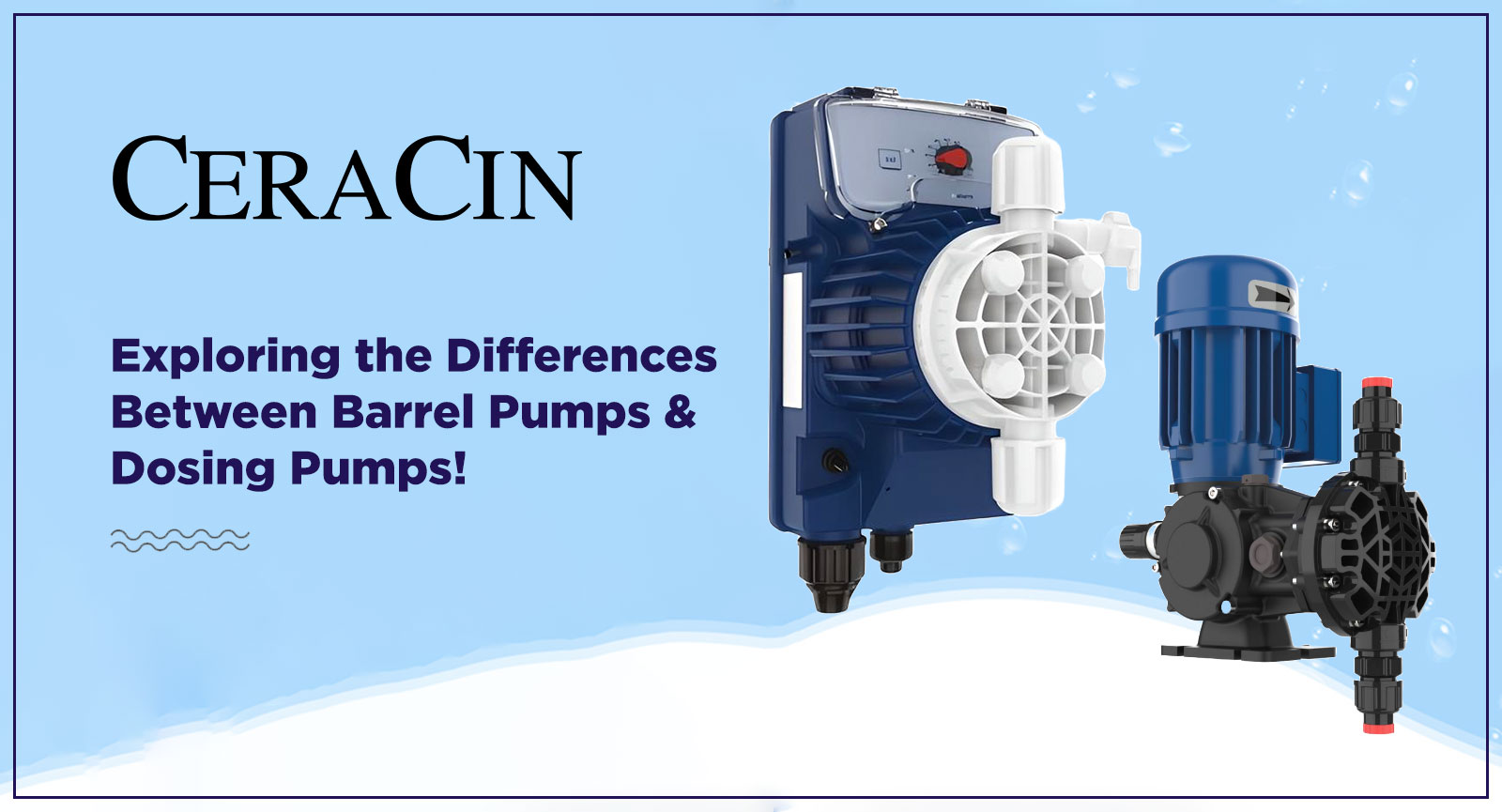
Exploring the Differences Between Barrel Pumps and Dosing Pumps!
Today, numerous types of pumps are employed to transfer fluids throughout sectors. Dosing pumps and barrel pumps are the most common forms of pumps we will discuss today.
A Brief Discussion on a Dosing Pump
As the name implies, these pumps use positive displacement to inject chemicals into steam, gas, or water. They have evolved into an essential component of integrated dosing systems, which allow for the automated dispensing of chemicals. The pump pulls a set volume of a chemical into the chamber before injecting it into a pipe or tank containing water or the fluid to be dosed. The electric motor has a controller that allows you to turn on or off the pump and adjust the flow rate.
A Basic Overview of a Barrel Pump
Drum pumps, sometimes known as barrel pumps, are mechanical devices used in industrial settings. This mechanism, which permits fluid to be transported from a barrel, has its unique operating principle. Certain elements of the pump begin to act by absorbing the liquid inside the barrel. These are auxiliary components, such as the suction pipe, electric or air motor, valves, and filters that are immersed in the barrel.
Key Differences Between Barrel Pumps and Dosing Pumps
Here are some main differences between the two types of pumps:
Purpose:
Barrel pumps are used for transferring liquids from one container to another, while dosing pumps are designed for injecting or adding a precise amount of liquid into a system.
Flow Rate:
Barrel pumps provide higher flow rates suitable for bulk transfer. Dosing pumps, on the other hand, deliver low flow rates but with high accuracy.
Accuracy:
Dosing pumps focus on precision and control, while barrel pumps focus on safe and efficient movement of fluids.
Applications:
Barrel pumps are ideal for transferring lubricants, solvents, and chemicals. Dosing pumps are preferred for chemical dosing, water treatment, and laboratory processes.
Operation Mode:
Barrel pumps can be manual, electric, or pneumatic. Dosing pumps usually run on electric motors or control systems that regulate the dose based on the need.
Design and Build:
A barrel pump has a long vertical tube that fits into containers. A dosing pump is more compact, often connected in pipelines or tanks for injecting fluids precisely.
Choosing the Right Pump for Your Use
When selecting between a barrel pump and a dosing pump, consider your process requirement. If your goal is to move liquids safely from large drums, a barrel pump is the practical choice. If your goal is to add a controlled quantity of a chemical into a process, then a dosing pump is more suitable.
Also, think about the type of liquid, flow rate, frequency of use, and the safety requirements of your application.
Conclusion
Both barrel pumps and dosing pumps are important tools that transfer fluids in different industries. This blog explained the differences between the two pumps. Now you can easily choose the right pump according to your requirements. Ceracin offers a range of barrel pumps and dosing pumps that are durable and easy to use. As leading dosing pump manufacturers, we offer affordable and high-quality pump solutions.

Ceracin
Ceracin has expertise in industrial pump manufacturing since 2016. We are committed to provide our nation with the highest quality pumps at competitive prices.